


RSNA 2025 Recap: The Momentum Carrying Radiology Into 2026
At RSNA 2025, it was clear that radiology is entering a defining moment. Imaging volumes continue rising, staffing remains tight, and many organizations are still…
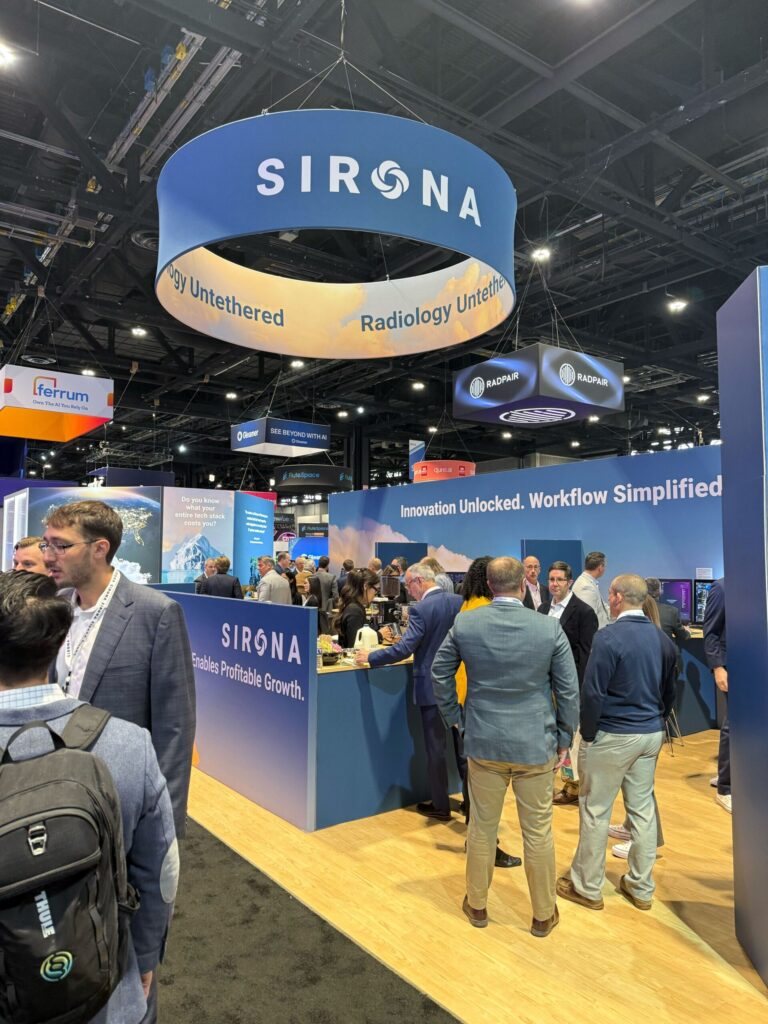
At RSNA 2025, it was clear that radiology is entering a defining moment. Imaging volumes continue rising, staffing remains tight, and many organizations are still operating on fragmented infrastructures, which threaten the bottom line. Across conversations with leaders from hundreds of institutions, the message was consistent. These challenges are intensifying, and most solutions on the market are not architected to deliver the level of workflow transformation that radiology now requires.
On the show floor, the AI showcase was larger than ever, with vendors highlighting foundation models and agentic AI as the next frontier. Cloud-based modernization was also a dominant theme, with companies of all sizes positioning the cloud as the answer to outdated technology. Amid this landscape, here are the key takeaways from RSNA 2025.
Being In The Cloud Isn’t Enough
Solutions must be architected from the first line of code to maximize value in the cloud. This may seem obvious, but many legacy solutions have been migrated to the cloud rather than built for it. In other words, the same code that was running in the hospital basement is now running in the cloud. It now has more reliable uptime and is likely more secure, but its functionality remains the same, and its ability to evolve is still constrained by inherently inflexible code. Almost every radiologist we spoke to emphasized the importance of clinical context, and the real value of the cloud lies in its ability to drive improvements and integrate data across multiple sites (after all, isolated solutions in the cloud remain isolated). Connecting all data provides the foundation for a complete view of the patient.
Context is Everything
The true promise of the cloud lies in connected viewing and reporting workflows, continuous improvement, cross-site data connectivity, and frictionless updates—capabilities that legacy architectures simply can’t deliver. This connected foundation enables functionality that radiologists have been missing.
Software that understands clinical context, is intelligent, and is necessary to provide meaningful value. It can help radiologists identify relevant information and automate many parts of the workflow.
Another central RSNA theme was that the wall between viewing and reporting is finally coming down. Leaders repeatedly expressed frustration with legacy workflows in which radiologists interpret in one system and reconstruct reasoning in another. As Sirona’s CPO Kate Kovalenko put it, “You can imagine a world where standalone reporting software just disappears.” That vision resonated deeply with attendees.
AI Becomes Workflow-Native—or It Won’t Get Used
One of the most consistent messages on the RSNA floor was that AI that lives outside the workflow is no longer viable. The next era of imaging won’t be defined by how many AI tools a department deploys, but by how seamlessly those tools integrate into the workflow.
Radiologists repeatedly emphasized the importance of clinical context, yet most software today operates without it. AI is deployed only on the data it is given access to, and detection algorithms run without understanding the reason for the exam.
Tools must be context-aware, intelligent, and capable of meaningfully reducing cognitive load, surfacing relevant priors, providing reliable and intelligent hanging protocols, personalizing displays, and enabling study-aware reporting.
RSNA 2025 made it clear: radiology is ready for platforms that unify interpretation, reporting, workflow, and AI into one intelligent environment. Sirona’s RadOS™ is already showing radiology practices what the future looks like. Check out more of our 2026 imaging trends predictions here.
If you’d like to dive deeper into what we demonstrated at RSNA—or explore how RadOS™ can modernize your imaging operations—we’d love to connect.
For more, explore our predictions for 2026 imaging trends here.
If you’d like to dive deeper into what we showcased at RSNA—or explore how RadOS™ can modernize your imaging operations—we’d love to connect.